Hip And Knee Pain
Hip and Knee Pain Relief in Williamsburg
Do sharp pains in your hip make it difficult to get up in the mornings, move about during the day, and lie back down at night? Do your knees feel unstable and painful, as if they may buckle underneath you without warning? Hip joint pain and knee pains can seriously interfere with your life, especially if you are dealing with both. Whichever may be hurting you, physical therapy can help get to the root of your problem safely and comfortably, without the need for harmful drugs or surgery. Contact Comber Physical Therapy and Fusion Chiropractic in Williamsburg today to schedule your appointment with one of our physical therapists!
Why do I have hip joint pain and/or knee pain?
Hip and knee pains can be experienced together or separately. Your hip is a ball-and-socket joint that works to support the weight of your upper body, relying on multiple muscles and tissues to keep it mobile and stable so it can function properly. Your knee is a hinge joint, confined to forward-and-backward motions. Individually, your knees support more weight than the hips, allowing you to stand, walk, run, and dance without falling over.
Pain felt in the hips and/or knees may originate in the joints themselves, but it may also be a result of an underlying condition in another part of the body. For example, your hips and knees are part of the same kinetic chain, meaning they make up a combination of weight-bearing joints that must function together in harmony in order for your body and posture to function properly. Therefore, a problem with your knee joint may transmit painful signals to your hips, and vice versa. If one part of the kinetic chain is out of balance, stress and deterioration may be placed on another.
What causes hip and knee pain?
The hips and knees contain similar structures; therefore, they can be subject to similar stresses. Many times, the hips and knees suffer the same diseases, disorders, and injuries. For example, overuse injuries such as tendinitis and chronic muscle strain are common in both the hips and knees because both joints are constantly in use. They are also both subject to acute injuries, such as sprains, strains, and dislocation.
Hip and knee pain can also be affected by referred pain from a pinched sciatic nerve, as the nerve travels through both areas. Imbalances in your stance or gait may cause abnormal stresses and premature wear-and-tear in your hips and knees, resulting in painful symptoms or arthritis.
Some painful conditions may be specific to one joint or the other. For example, the Mayo Clinic states that cartilage injuries known as labral tears are specific to hip pain, while inflammation of the bursa sacs known as bursitis is a specific condition affecting the knee joint. However, painful injuries that cause instability in the hips can also affect the knees. Tight hip flexor muscles and weak gluteus medius muscles can cause the hip to rotate inward without you realizing it. This can cause painful problems such as iliotibial band friction syndrome or patellofemoral stress syndrome, as stress is put on the knee or kneecap.
How will physical therapy relieve my hip and knee pain?
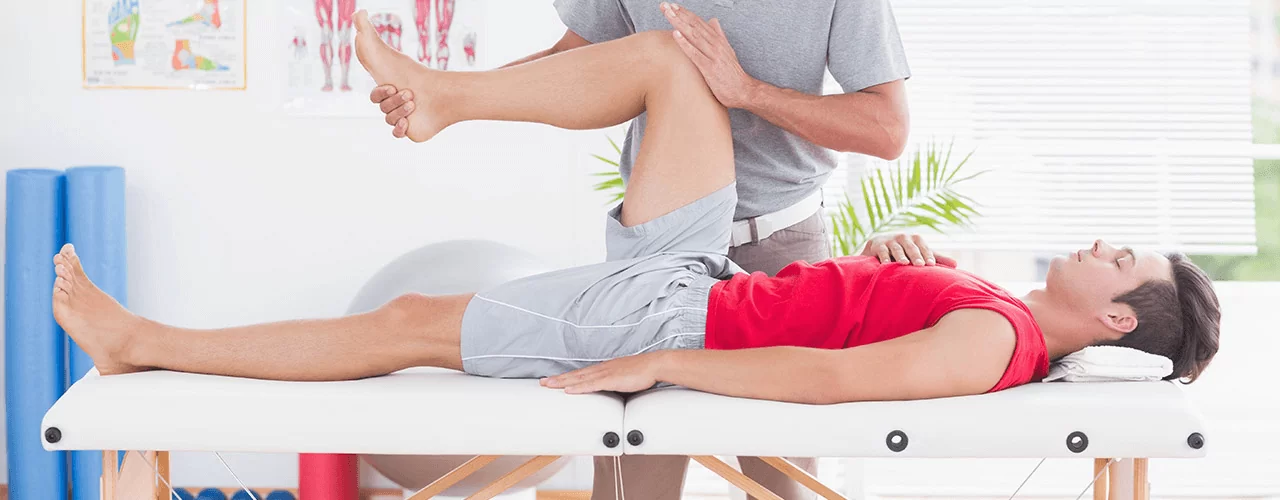
The physical therapy treatments at Comber Physical Therapy can help to greatly reduce your hip and knee pain. In many cases, it can even relieve it altogether, sparing you the need for potentially harmful medication or surgical correction. Our physical therapist will examine your hip and/or knee for signs of misalignment or structural damage, in addition to examining your stance, posture, gait, and range of motion. After your physical exam is complete, our physical therapists will prescribe a physical therapy plan for you, aimed at relieving unnatural stresses and strains, and normalizing your joint function.
You will be given targeted exercises designed for relieving joint pain and stabilizing weak hip and/or knee tissues. The exercises may vary depending on your condition; for example, research has demonstrated that those suffering from kneecap pain tend to respond better to exercises that focus on strengthening both the hips and knees, rather than just focusing on the knees alone.
You may also be given exercises designed to strengthen the core, including your lower back muscle groups, lower abdominal muscle groups, or pelvic muscles. Core exercises are aimed at straightening your posture and equalizing the weight load on both sides of your body. Additional specialized treatments may also be added as our physical therapists deem fit, such as ice and heat therapies, laser therapy, massage therapy, or other soft tissue treatments that relieve pain and promote the healing of damaged hip and/or knee tissues.
It is time to take a stand against your hip and knee pain. Contact Comber Physical Therapy and Fusion Chiropractic in Williamsburg, VA today to speak with one of our dedicated physical therapists, and get started on the path toward long-lasting pain relief. Your hips and knees will be glad you did!
Hip and Knee Pain FAQs
Can a problem in my lower back cause hip or knee pain?
It’s certainly possible. Irritated nerves or joint stiffness in the back can sometimes produce referred pain in the hip, thigh, or knee, even when the painful joint itself is healthy. If there’s nerve involvement, the pain may be accompanied by numbness, tingling, burning, or symptoms that travel down the leg. A physical examination at Comber Physical Therapy Fusion Chiropractic can help determine whether your symptoms originate in the hip, knee, or lower back, or in a combination of these areas.
Should I keep exercising if I have hip or knee pain?
We rarely recommend total rest for hip or knee pain, although the specifics of your exercise program will depend on your symptoms and their cause. In most cases, low-impact exercises such as walking, cycling, or swimming are good choices, helping to maintain mobility without placing excessive stress on the joints. One of our physical therapists can recommend safe exercises based on your current abilities and goals.
Why does my knee hurt even though the problem is actually in my hip?
The hip and knee work together during nearly every movement, including walking, climbing stairs, and standing up from a chair. Weakness, stiffness, or limited hip mobility can alter the distribution of forces through the leg, placing extra stress on the knee. Likewise, a painful knee may cause you to move differently, which can eventually lead to hip discomfort. Our whole-body approach can help identify the true source of the problem to ensure we’re addressing the underlying cause rather than just the painful joint.
Do I need an X-ray or MRI before starting physical therapy for hip or knee pain?
In most cases, you can begin physical therapy without imaging. We’ll evaluate your strength, mobility, balance, walking pattern, symptoms, and ability to complete everyday movements and use that information to guide care. However, if the evaluation suggests a fracture, a major ligament injury, or advanced joint damage, we might refer you for imaging to get a more complete picture.
Can physical therapy help with hip or knee pain caused by arthritis?
Absolutely! Physical therapy is highly effective for people with hip or knee arthritis to improve strength, joint mobility, balance, walking tolerance, and confidence in daily activities. We can also provide guidance on pacing, activity modification, and gradually increasing exercise without causing a major symptom flare.
Although physical therapy cannot reverse arthritis, it can help reduce its impact on movement and support continued participation in work, recreation, and everyday life.